


The swimsuit as a power plant: A sensor generates its own electricity while swimming
In 2026 researchers presented a triboelectric sensor that monitors movement in water while generating its electrical energy from the movement itself.
Knowledge platform
Expert knowledge for training, teaching and development in swimming. Free-access articles are available to everyone; Premium Knowledge is included with Bronze, Silver and Gold.
Articles
In 2026 researchers presented a triboelectric sensor that monitors movement in water while generating its electrical energy from the movement itself.
A new human-pose-estimation study attempts to automate biomechanical swimming analysis—despite an environment that is particularly challenging for computer vision.
A validation study compared optical pulse measurement at the temple with a swimming chest strap—and found surprisingly good agreement for average heart rate.
New wearable research measures forces at the hand in three spatial directions and investigates which of them are associated with freestyle sprint performance.
Fourteen elite swimmers were monitored across three intensive training cycles using HRV, sleep, motivation and performance data—then Explainable AI searched for patterns.
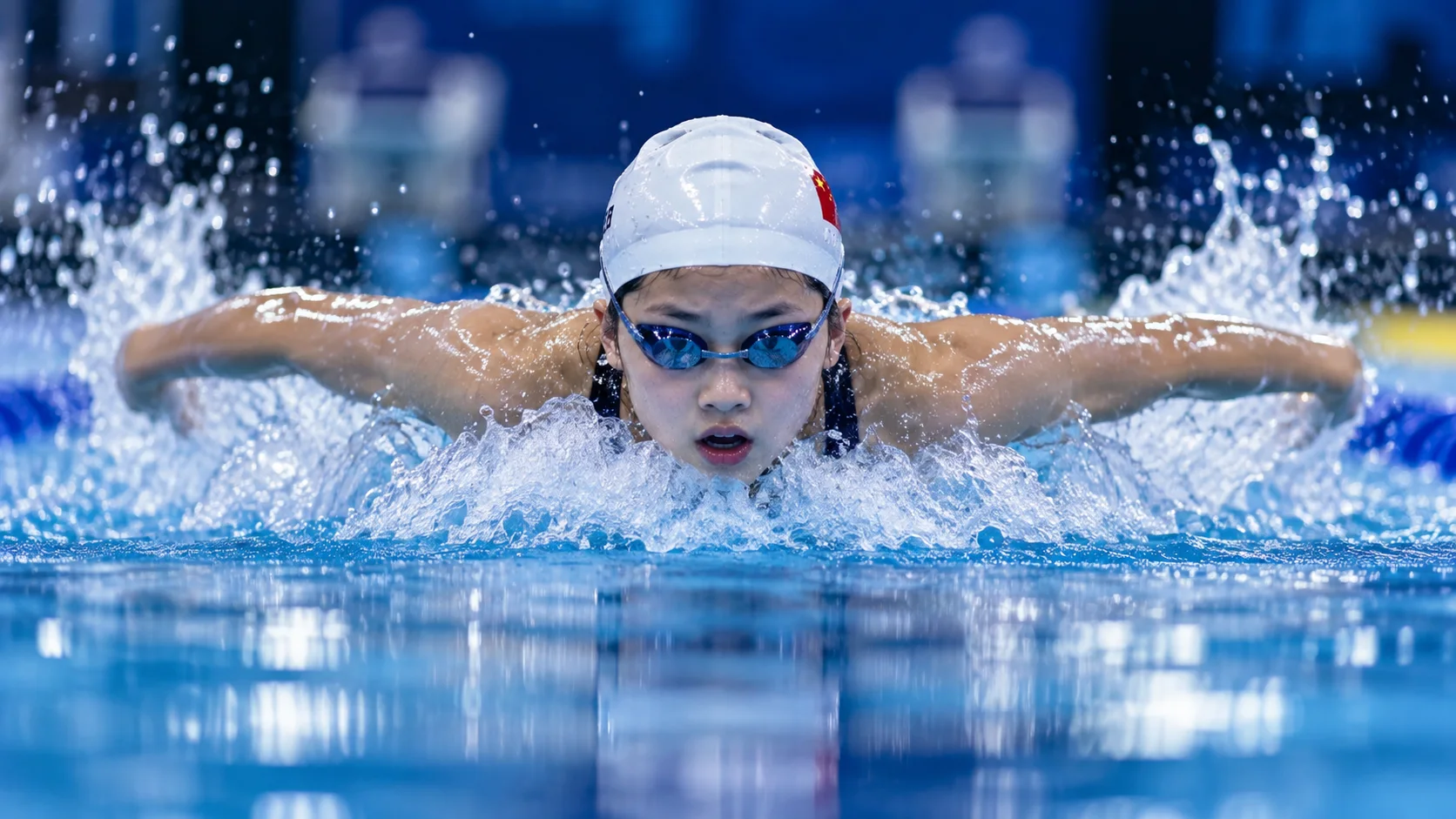
Yu Zidi is only 13 years old. At the Asian Games she swims the 200 metres butterfly in 2:05.08 and wins gold. A performance that makes even experienced swimmers look at the clock twice...
600, 1,200 or 1,800 metres—how much warm-up is actually useful before a 100-metre race?
A new 2026 meta-analysis shows that high-intensity interval training can improve both aerobic capacity and competition performance.
Early-morning training is part of swimming. But a new study asks whether every session really has to start that early.
Warm, cold, warm, cold: contrast water therapy is frequently used in elite sport. But does it actually help?
Explosive strength exercises before a sprint are intended to boost performance in the short term. In swimming, however, this does not work equally well for every athlete.
Many swimmers have followed the same warm-up routine for years. Yet there are good reasons to individualise warm-ups more strongly.
The 2028 Paralympic Games in Los Angeles are getting closer—and the competition framework is becoming increasingly concrete.
Few topics are as central to fairness in Para sport as classification.
With the World Championships in Singapore, Para Swimming reached another milestone in its international development.