


Only 40 percent of world-class swimmers competed at a Junior Worlds
A large analysis across three endurance sports challenges a common talent assumption: early international junior success is by no means a requirement in swimming.
Knowledge platform
Expert knowledge for training, teaching and development in swimming. Free-access articles are available to everyone; Premium Knowledge is included with Bronze, Silver and Gold.
Articles
A large analysis across three endurance sports challenges a common talent assumption: early international junior success is by no means a requirement in swimming.
A small study shows how strongly biological growth can change the interpretation of training breaks in youth swimmers.
In 130 young swimmers, biological maturity itself did not explain performance best; body characteristics such as arm span and fat-free mass were more informative.
The 2026 Junior World Championships in Santa Fe reached a new high with 273 athletes from 39 nations—a strong signal for the development of youth open-water swimming.
At the Asian Games in Japan, 17-year-old Yumeki Kojima set a new junior world record in the 400 metres individual medley—and won gold in front of a home crowd.
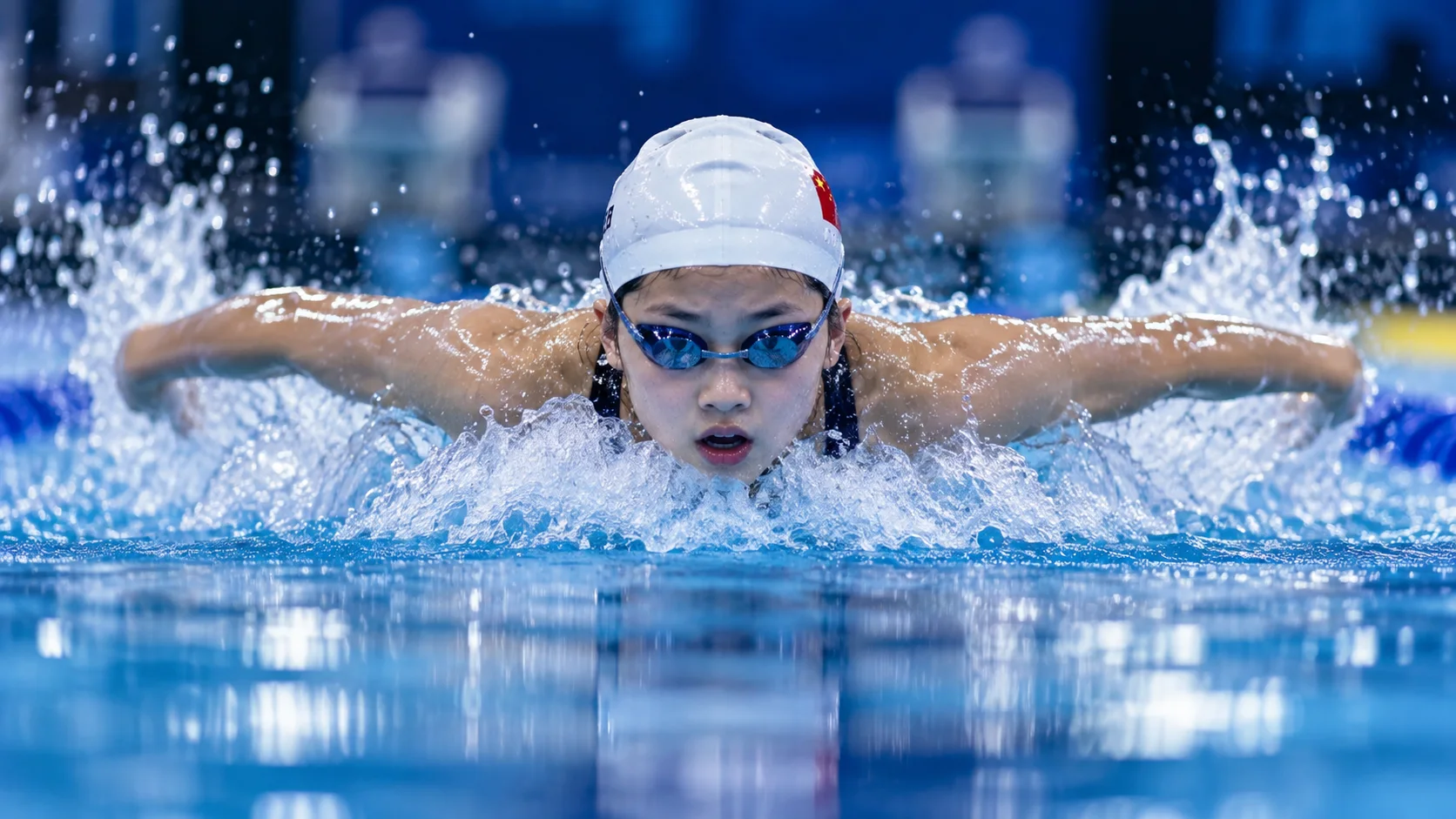
Yu Zidi is only 13 years old. At the Asian Games she swims the 200 metres butterfly in 2:05.08 and wins gold. A performance that makes even experienced swimmers look at the clock twice...
Junior World Championships regularly show how early international top-level performances are now being achieved.
A Junior World Championships is far more than a medal event.
Performance development in youth swimming is not linear—and a new study shows why patience is especially important for coaches.