


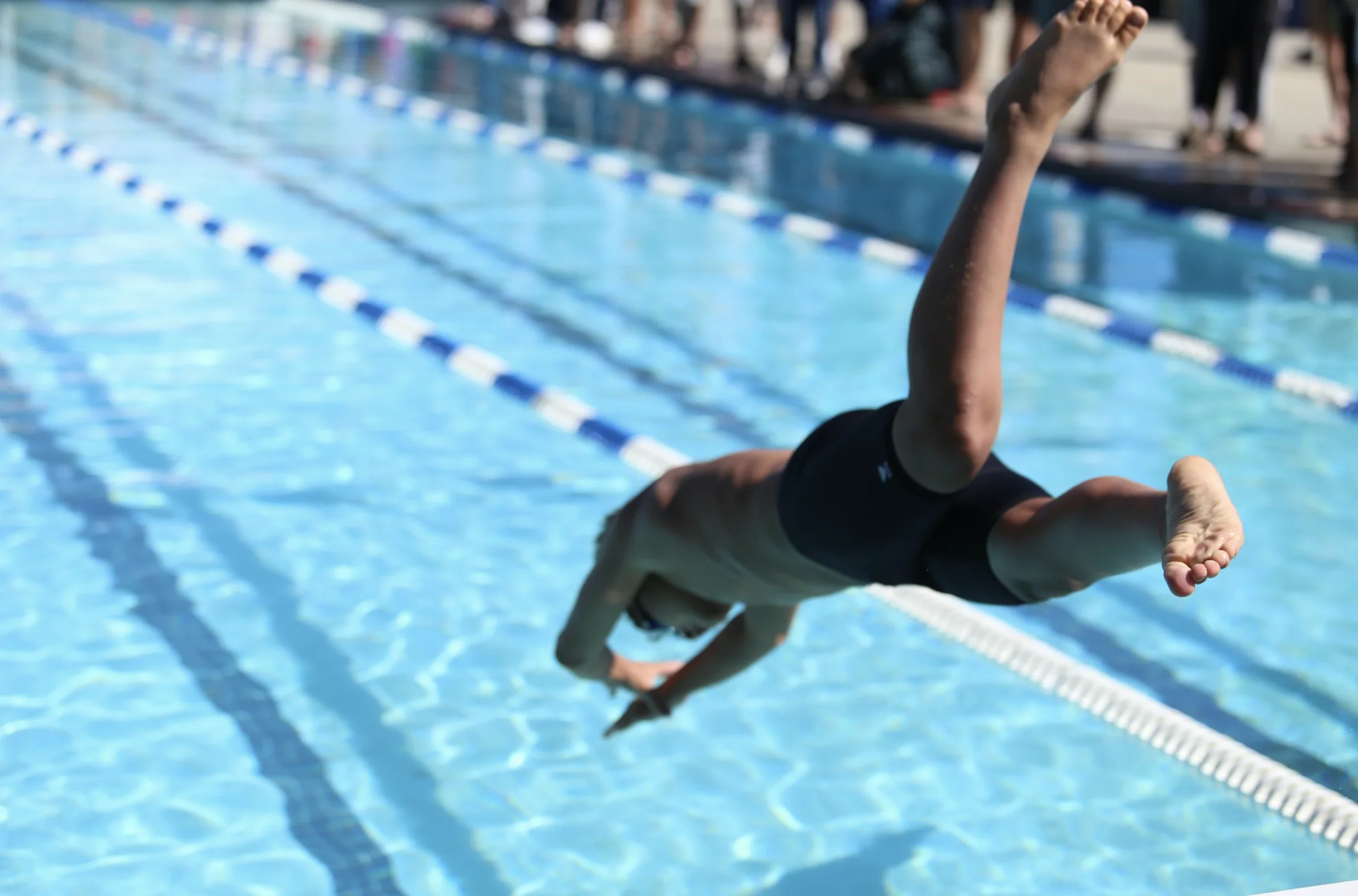
Which phase ultimately makes the biggest difference — the start, the turn or surface-swimming speed? A recent analysis of 681 long-course races from international junior and elite competitions offers a more nuanced answer.
In sprint events, the start is especially important. Over 200 and 400 metres, the importance of turns increases. Across almost all distances, however, surface-swimming speed remains the largest single contribution to total time.
Technique has to become distance-specific
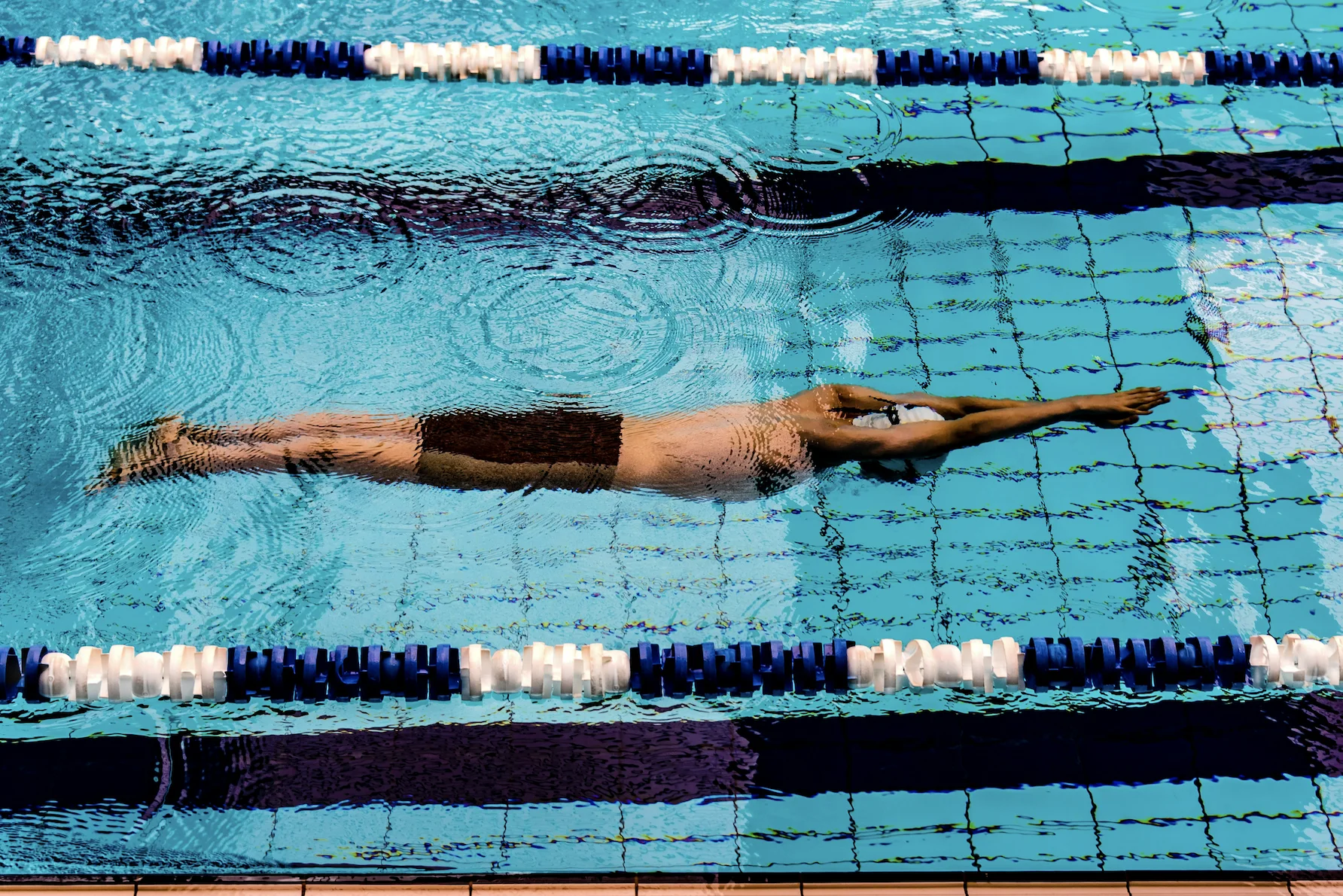
For training planning, this means that technique work should not look the same for every swimmer. A 50-metre specialist needs different priorities from a 400-metre swimmer.
Sprinters benefit especially from an explosive start and a powerful underwater phase. Over 200 and 400 metres, the speed and consistency of each turn also become critical.
Analysing the race phase in which the greatest amount of time is lost allows technique training to be targeted much more precisely.
Importance changes with race distance
The results make clear why a single technical metric is hardly sufficient to assess swimming performance. Over 50 metres, a weak start can cost a substantial part of the overall performance because the start phase accounts for a comparatively large proportion of the race. As the distance increases, that relationship shifts.
Over 200 and 400 metres there are several turns. Each one provides an opportunity to gain—or lose—time. As the race unfolds, the ability to maintain surface-swimming speed becomes increasingly important.
This also means that two swimmers with almost identical final times can have completely different performance profiles. One gains time at the start and loses it in surface swimming; the other starts more slowly but is clearly stronger between the walls.
From final time to race structure
For coaches, dividing a race into individual phases is therefore particularly valuable. Even simple video recordings can help assess start time, 15-metre time, turn sections and pure surface-swimming speed separately.
Training can then become more targeted. A sprinter with an excellent start but weaker speed in the second 25-metre section needs a different emphasis from an athlete who is competitive in surface swimming but loses time at every wall.
The great strength of this kind of race analysis is that it turns one final time into several concrete training tasks. Technique training therefore becomes more measurable. Instead of working generally on “better turns”, for example, a clear target time can be defined for the section from five metres before to ten metres after the wall.
SCIENTIFIC SOURCE
https://pubmed.ncbi.nlm.nih.gov/41780505/