


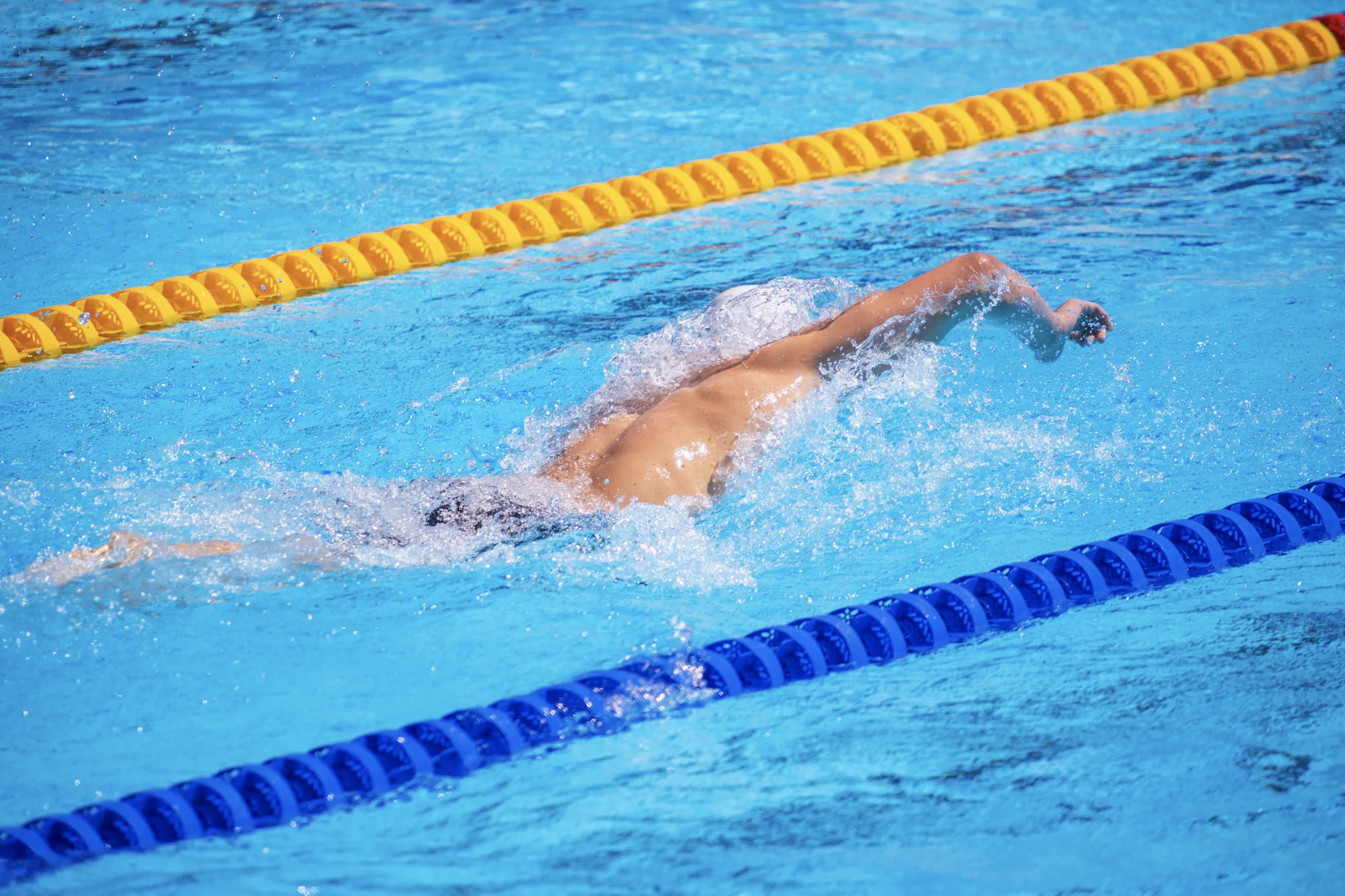
Recent analyses of the 100 metres freestyle show just how closely the phases of a race are linked. Top performances arise from an explosive start, high speed in surface swimming, efficient turns and a technically stable finishing phase.
Differences between male and female elite swimmers in turn and finish strategies are also interesting. This underlines that technical optimisation should be individualised.
Why video analysis is particularly valuable
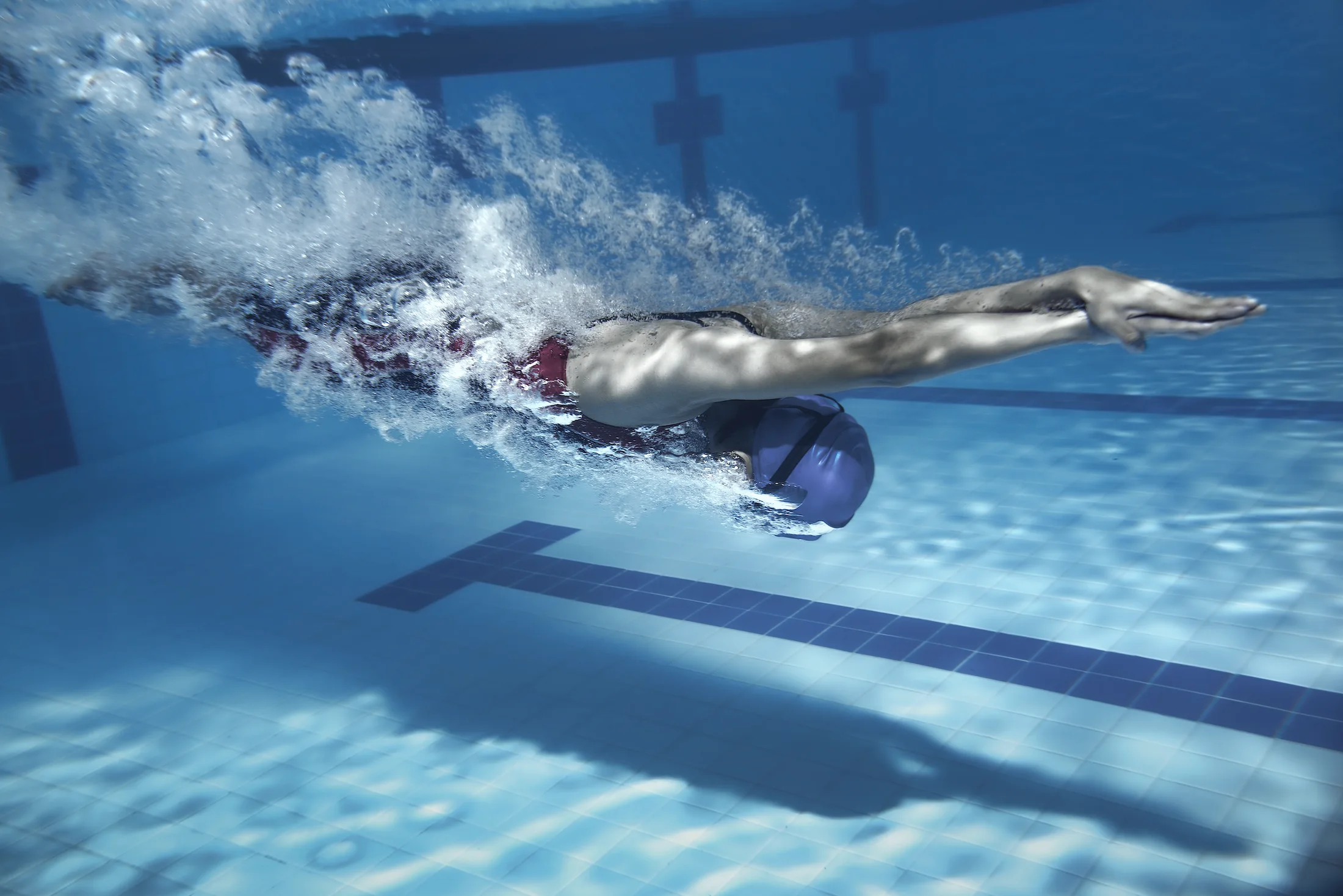
Anyone who looks only at the final time often fails to see where time is actually being lost. Segment times for the start, 15 metres, turn, underwater phase and finish provide far more information.
Especially over 100 metres, small technical losses quickly add up to several tenths of a second—and therefore several places in a final.
Why 100 metres is technically so demanding
The 100 metres sits exactly between a pure maximal sprint and a distance where pronounced pace control is already necessary. A swimmer has to start very fast, but cannot expend so much speed and energy that technique falls apart in the second half of the race.
This creates a particular challenge: the key technical characteristics change during the race. Stroke rate rises or falls, stroke length changes, breathing becomes more frequent and race speed has to be rebuilt as quickly as possible after the turn.
The final quarter of the race therefore often shows how stable a technique really is. An athlete can look excellent over the first 25 metres and still lose time if body position, catch or rhythm deteriorate markedly under fatigue.
Segment analysis instead of gut feeling
A standardised video analysis is worthwhile for coaches. It can be useful, for example, to assess separately the start to 15 metres, the first free-swimming section, the turn phase, the second underwater phase and the final metres to the wall.
Stroke rate and stroke count can additionally provide clues as to why speed changes. A higher rate is not automatically better if the effective propulsive distance per cycle decreases sharply at the same time.
The analysis becomes particularly valuable when the same metrics are compared across several competitions. This makes it possible to identify whether a personal best resulted from a genuine technical improvement or merely from one particularly strong race phase. Competition analysis therefore becomes a direct tool for the next training period.
SCIENTIFIC SOURCE
https://pubmed.ncbi.nlm.nih.gov/40461524/